Is Havana safe for travelers?
Havana has a moderate safety profile. The US State Dept advises "Exercise Increased Caution" for Cuba due to arbitrary enforcement of local laws. Many visitor-friendly areas exist, but awareness of surroundings is warranted.
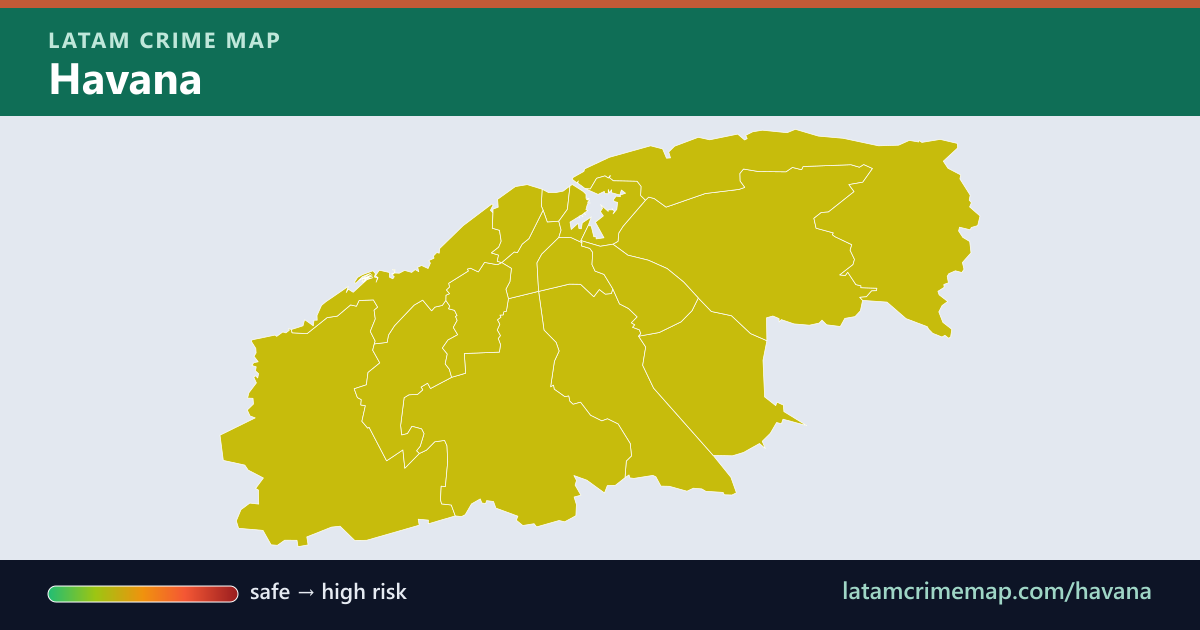
What the sources say
Havana scores Moderate. Cuba's capital has historically very low violent crime by regional standards — a legacy of the state's social control and economic model. However, economic desperation following the post-2020 crisis has increased petty theft and scams targeting tourists significantly. All three advisories place Cuba at elevated caution, noting the changed security context.
Scams targeting tourists are now very common: jineteros (street hustlers) offering overpriced private rooms, restaurants, or transport; currency exchange scams; and taxi fraud. Pickpocketing in crowded areas and bag-snatching have increased. The more serious concern for foreign nationals: photographing security forces, protests (rare), or infrastructure without authorisation can result in detention.
Havana Vieja, Vedado, and Miramar are the main visitor areas; all are manageable with vigilance. Be selective about accepting help from strangers. Use CUC taxis with metered fares. As with Nicaragua, the physical safety from violence is reasonable; the political and legal risk environment is the primary concern for Western visitors.
Official statistics
- World Bank / UNODC — national intentional homicide rate for Cuba: 2019: 4.5/100k; 2018: 4.4/100k; 2017: 4.6/100k; 2016: 5.1/100k. Note: this is a country-level rate, not city-specific. Source: World Bank Open Data (VC.IHR.PSRC.P5), compiled from UNODC Crime Trends Survey.
The map covers 16 districts with differentiated risk ratings:
Ratings are consolidated from the sources below, not real-time. Conditions can change — verify before travel.
Common questions
Is Havana safe for tourists?
Havana is safe for tourists who exercise reasonable vigilance. Stay in well-visited areas, avoid displaying expensive electronics or jewellery, and be cautious after dark in less-familiar neighbourhoods.
Is Havana safe at night?
Havana is reasonably safe at night in well-known tourist and residential areas. Avoid displaying valuables, use reputable transport, and be cautious in unfamiliar neighbourhoods after dark.
What are the safest neighbourhoods in Havana?
Based on incident data consolidated across our sources, La Habana Vieja, Playa, Plaza de la Revolución are among the areas rated safer in Havana. Always verify current conditions with the sources listed below, as conditions can change.
Which areas of Havana should travellers be cautious about?
Regla, Arroyo Naranjo, Bauta are rated with elevated caution on our map. This reflects patterns from consolidated advisory and incident sources — conditions vary and can change, so check current guidance before travelling.
What are the main safety risks for visitors to Havana?
The primary risks for visitors to Havana are opportunistic theft, phone snatching, and pickpocketing in crowded areas. Cuba authorities note arbitrary enforcement of local laws.
Sources consulted
- Australia DFAT Smartraveller — Safety
- US State Department Travel Advisory
- UK FCDO Travel Advice — Safety and Security
- Canada DFATD Travel Advice
- World Bank — Intentional Homicides per 100k (Cuba)
- Tiers: editorial travel-safety synthesis (OSAC/advisories); municipios without a curated tier inherit the city overall