Is Rio de Janeiro safe for travelers?
Rio de Janeiro requires heightened vigilance. The US State Dept advises "Exercise Increased Caution" for Brazil due to crime, particularly in urban areas. Specific neighbourhoods and times of day vary significantly — check district-level detail before travelling.
What the sources say
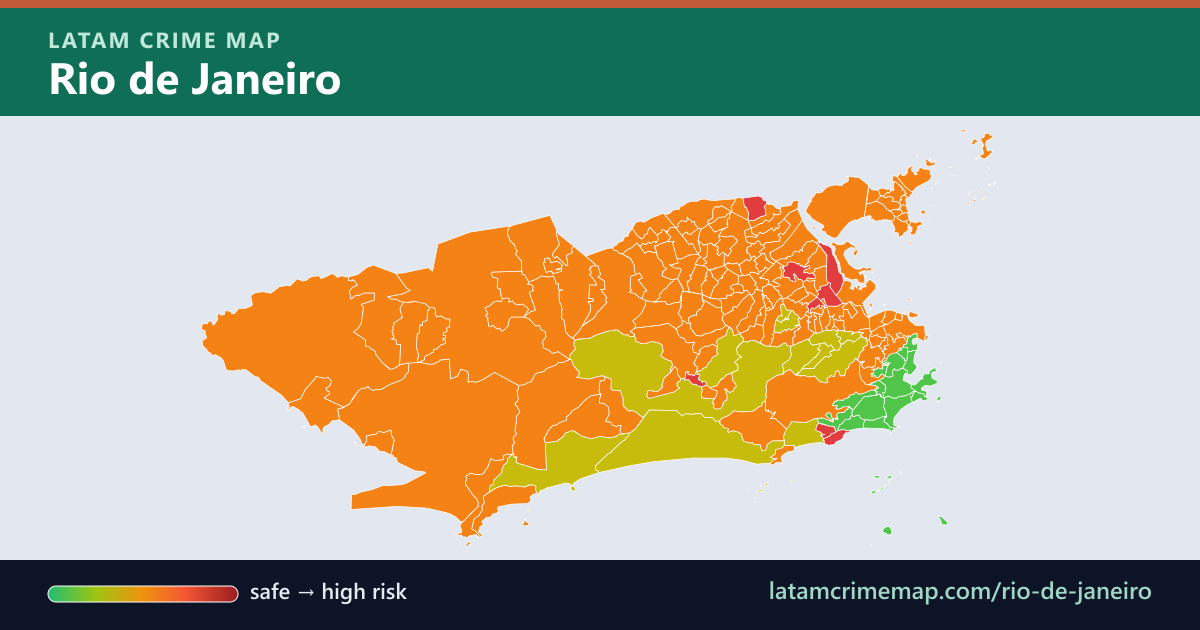
Rio is a Caution-tier city with extreme internal variation. The tourist corridor — Ipanema, Leblon, Copacabana, Santa Teresa, and Lapa at certain hours — is manageable with precautions. Favela complexes (Complexo da Maré, Complexo da Penha, Rocinha approaches) are effectively no-go for visitors; all three advisories rate them as Avoid-equivalent due to armed police operations and cartel/militia clashes.
Stray bullets ("bala perdida") from favela confrontations occasionally reach adjacent tourist areas and transit corridors. The Canada DFATD advisory specifically names Maré and Penha complexes and warns that emergency services are difficult to reach in affected areas. Express robbery of tourists on Copacabana beachfront, particularly at night, is well-documented.
Stick to Zona Sul and Santa Teresa by day. After dark, use apps for all movement; do not walk between Lapa, Centro, and hotel districts. Avoid any road that passes through or alongside favela complexes regardless of time. Never display phones or jewellery on the waterfront.
Official statistics
- ISP-RJ dados para Rio de Janeiro — 2026 (5 meses YTD): 419 homicídios dolosos, 451 CVLI, 25,425 roubos totais, 21 latrocínios. 2025: 965 homicídios, 62,132 roubos.
- World Bank / UNODC — national intentional homicide rate for Brazil: 2023: 19.3/100k; 2022: 20.1/100k; 2021: 20.5/100k; 2020: 21.8/100k. Note: this is a country-level rate, not city-specific. Source: World Bank Open Data (VC.IHR.PSRC.P5), compiled from UNODC Crime Trends Survey.
The map covers 162 districts with differentiated risk ratings:
Ratings are consolidated from the sources below, not real-time. Conditions can change — verify before travel.
Common questions
Is Rio de Janeiro safe for tourists?
Rio de Janeiro requires heightened awareness for tourists. Opportunistic theft is the most common risk. Stick to established tourist areas, use registered taxis or ride-hailing apps, and avoid unfamiliar areas at night.
Is Rio de Janeiro safe at night?
Night-time safety in Rio de Janeiro varies significantly by neighbourhood. Stick to established areas, use ride-hailing apps rather than hailing taxis on the street, and avoid unfamiliar areas after dark.
What are the safest neighbourhoods in Rio de Janeiro?
Based on incident data consolidated across our sources, Flamengo, Glória, Laranjeiras are among the areas rated safer in Rio de Janeiro. Always verify current conditions with the sources listed below, as conditions can change.
Which areas of Rio de Janeiro should travellers be cautious about?
Vidigal, Manguinhos, Vigário Geral are rated with elevated caution on our map. This reflects patterns from consolidated advisory and incident sources — conditions vary and can change, so check current guidance before travelling.
What are the main safety risks for visitors to Rio de Janeiro?
Rio de Janeiro sees higher rates of robbery, vehicle theft, and in some areas more serious incidents. Official sources highlight crime, particularly in urban areas as key concerns in Brazil.
Sources consulted
- Australia DFAT Smartraveller — Safety
- US State Department Travel Advisory
- UK FCDO Travel Advice — Safety and Security
- Canada DFATD Travel Advice
- ISP-RJ — Instituto de Segurança Pública do Rio de Janeiro (Rio de Janeiro)
- World Bank — Intentional Homicides per 100k (Brazil)
- Vanguard Attaché — Rio de Janeiro (risk model)
- ISP-RJ — Instituto de Segurança Pública
- OSAC — Brazil