Is Santiago safe for travelers?
Santiago requires heightened vigilance. The US State Dept advises "Exercise Increased Caution" for Chile due to civil unrest and petty crime. Specific neighbourhoods and times of day vary significantly — check district-level detail before travelling.
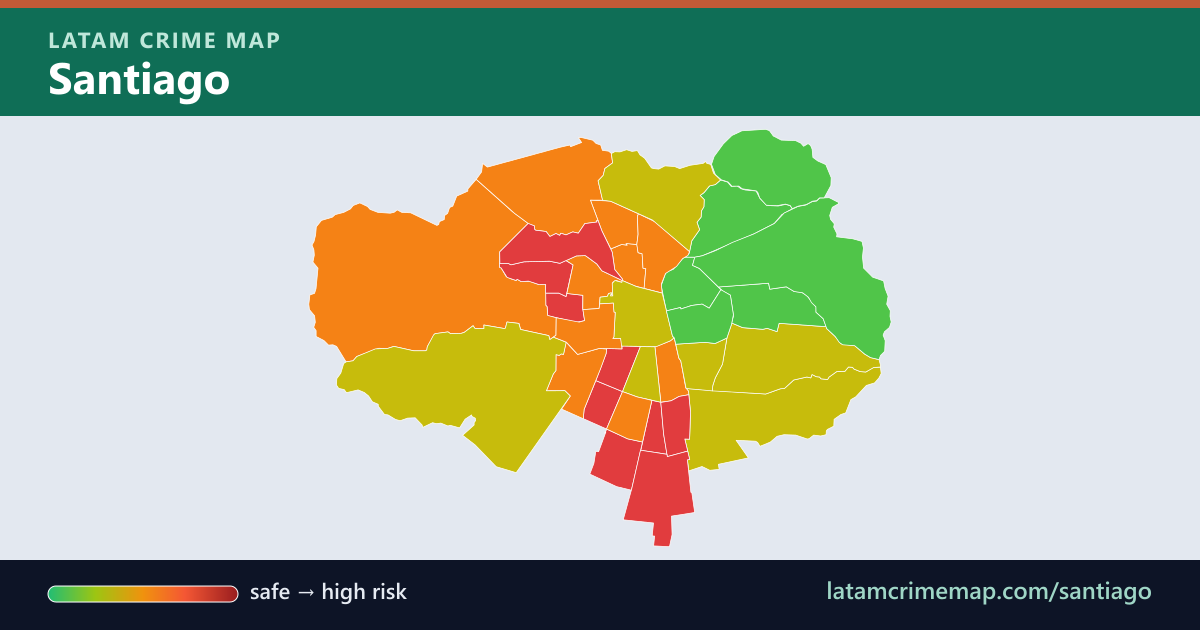
What the sources say
Santiago scores Caution overall, but Chile remains among the safer large Latin American countries and Santiago operates notably below the regional mean. All three advisories place Chile at lower alert levels than neighbours Peru, Bolivia, or Argentina. The city's main tourist areas — Las Condes, Providencia, Bellavista, and Lastarria — function at effectively Moderate risk levels for visitors.
Pickpocketing and bag-snatching have increased in the historic centre (Plaza de Armas, La Alameda), on Metro lines, and during the October-November demonstrations that now occur annually. Robbery has increased in some Cerro San Cristóbal and Santa Lucía hillside approaches. The Estación Central bus terminal area carries elevated risk.
Most tourist activity — museums, Cerro Santa Lucía, Plaza de Armas, Barrio Italia, Lastarria — is accessible with standard urban precautions. The Estación Central area and surrounding commercial blocks require vigilance. Bellavista nightlife: arrive by app, not on foot from Centro. Chile remains one of the more navigable countries on this list.
Official statistics
- PDI Chile — Santiago (Región Metropolitana de Santiago): 2025 año completo: 13 homicidios y femicidios, 1,264 robos con violencia e intimidación, 2,161 hurtos. 2026 Q1 (ene-mar): 4 homicidios. Fuente: Policía de Investigaciones de Chile, datos.gob.cl.
- World Bank / UNODC — national intentional homicide rate for Chile: 2023: 6.3/100k; 2022: 6.8/100k; 2021: 4.7/100k; 2020: 5.8/100k. Note: this is a country-level rate, not city-specific. Source: World Bank Open Data (VC.IHR.PSRC.P5), compiled from UNODC Crime Trends Survey.
The map covers 32 districts with differentiated risk ratings:
Ratings are consolidated from the sources below, not real-time. Conditions can change — verify before travel.
Common questions
Is Santiago safe for tourists?
Santiago requires heightened awareness for tourists. Opportunistic theft is the most common risk. Stick to established tourist areas, use registered taxis or ride-hailing apps, and avoid unfamiliar areas at night.
Is Santiago safe at night?
Night-time safety in Santiago varies significantly by neighbourhood. Stick to established areas, use ride-hailing apps rather than hailing taxis on the street, and avoid unfamiliar areas after dark.
What are the safest neighbourhoods in Santiago?
Based on incident data consolidated across our sources, Providencia, Vitacura, La Reina are among the areas rated safer in Santiago. Always verify current conditions with the sources listed below, as conditions can change.
Which areas of Santiago should travellers be cautious about?
Lo Espejo, Lo Prado, Pedro Aguirre Cerda are rated with elevated caution on our map. This reflects patterns from consolidated advisory and incident sources — conditions vary and can change, so check current guidance before travelling.
What are the main safety risks for visitors to Santiago?
Santiago sees higher rates of robbery, vehicle theft, and in some areas more serious incidents. Official sources highlight civil unrest and petty crime as key concerns in Chile.
Sources consulted
- Australia DFAT Smartraveller — Safety
- US State Department Travel Advisory
- UK FCDO Travel Advice — Safety and Security
- Canada DFATD Travel Advice
- PDI Chile — Estadísticas Policiales (Santiago)
- World Bank — Intentional Homicides per 100k (Chile)
- CEAD — Centro de Estudios y Análisis del Delito
- OSAC — Chile